In the dream I had last night, this is what I saw myself saying (I woke up and found my phone to immediately jot it down as it I believe it is encouragement from the Lord, so clock it):
High school may be the best years for some or the worst years for some. However, may you learn and not just academically what you need to learn, learn to pivot, and navigate storms with wisdom, courage, and God’s grace.
And I will add: May you grow and begin to build the foundations of your future. High school is just a small fraction of your life. Your world is and future will be much bigger than high school. And the best is yet to come. Be encouraged and finish strong. Find your safe, God-appointed tribe that Lavell Harris, my former student and speaker at one of my school sites’s recent graduation, says, “corrects you in private and celebrates you in public.” I pray you have the support, truth, and love to usher you into your God-given destiny. May you start and finish strong. May you not give up, and may you learn who God created you to be, in Jesus’ name, amen.
This is encouragement for our high school youth, and congratulations to the class of 2025 high school graduates!
Originally posted July 31, 2018. Updates have been made.
This post features links to great products, and as an Amazon Associate, I earn a commission if you click and buy.
We have made it to August. Many families are getting ready to take road trips with necessities, fears, hopes, excitement, anxiety, goals, and dreams to college campuses all over the world. Your child made it through high school and is now about to step foot on a college campus to pursue their careers and dreams as well as develop more independence. So, how do you prepare your child for his/her big day? Here are ten ways to prepare your child for his/her move in day at college:
Have all of their financial aid for school worked out. This doesn’t just apply to four-year schools, but two-year schools also. But I always tell my students that the first stop you make when you are moving on campus is the financial aid office for a follow-up. You want to know everything is clear, what monies are coming in and going out, or how much money you have to pay out of pocket regarding your tuition and fees. Moreover, months prior before starting school, have a FAFSA professional or your child’s high school counselor help you review your child’s financial aid award letter to make sure you and your child understand it. If you and/or your child are pulling any loans, make sure you have completed the Loan Entrance Counseling (studentloans.gov) as well as understand loans and how they work. You don’t want any financial stress added to his/her first year of college, through college, and even after college.
Make sure your child actually applied to the school and has gotten accepted. I know this is a no-brainer. However, you would be surprised how students say they are going somewhere only to not have applied or read through all of their college mail and follow through their next steps.
Attend orientation. If orientation is scheduled prior to move-in, please try your best to take advantage of this and go with your child. This is not only a very crucial informational session but a chance to settle any matters prior to move-in. It may also be a chance to get a tour or final tour, get met with a warm welcome, and be greeted with a kick-off celebration just for incoming freshmen and their families.
Have a heart-to-heart, transparent talk about some issues that can arise at school and how to use effective problem solving. Give scenarios and talk about any mistakes you have made in college or during your teen and young adult years. Discuss your expectations, their expectations, their fears, etc.
Teach him/her to not be afraid to ask for help. Also teach him/her how to be resourceful if he/she isn’t. A lot of students do not know how to navigate the campus for help and resources. Students can go to their school’s wellness center for counseling, advisement and dean’s office for issues with classes, their Dorm’s R.A. (Resident Assistant) for roommate issues, the financial aid office to sign up for work study and to inquire about scholarships and financial aid.
Pay the housing fee. And make sure he/she gets to know his/her roommate via phone and/or social media. The schools have things set in place for your child to safely contact and get an overall sense of who his/her roommate may be. Your child also may have the opportunity to suggest or pick his/her roommate if a student he/she knows will be attending the same school and wants to roommate with that particular person.
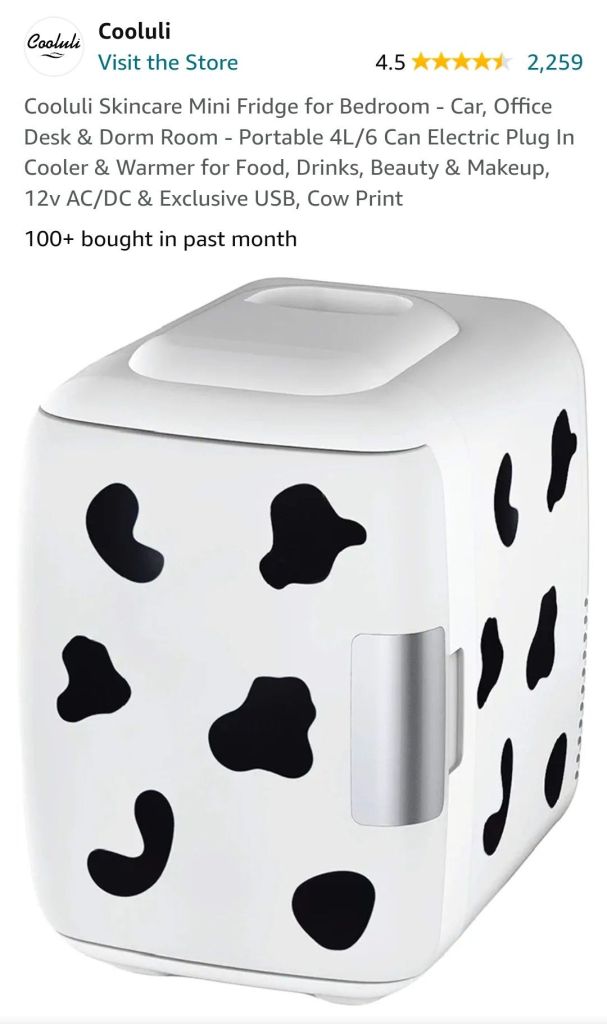
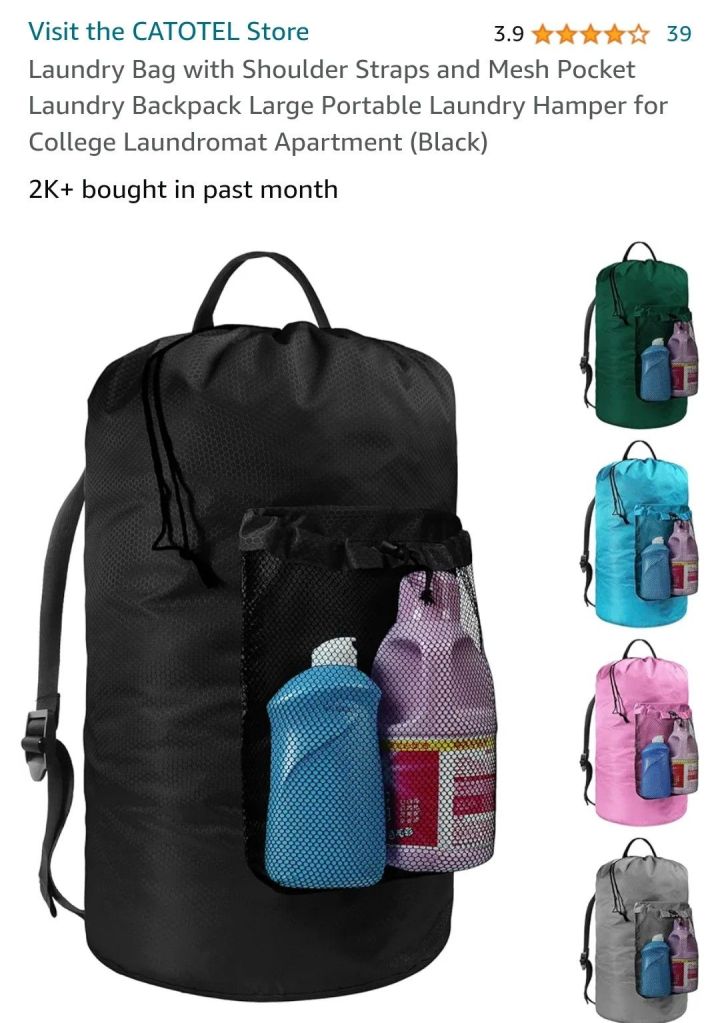
Make a list of items needed to move in for the first year of school. Have important documents pertaining to your child’s school in a special folder and handy. Obtain proper ID and parking passes if applied. Get and request gift cards if you prefer to buy necessities at a Walmart near or in the town of your child’s school campus when your child moves in and to have on hand when settled. Sometimes, this is less of a hassle than having to rent a truck or load lots of luggage in the back. See at the end of this post also for some great products. See this site for an example of a college packing list. https://www.society19.com/10-things-to-do-before-college-move-in-day/
According to society19.com, you should also review school policy and guidelines with your child.
Make a list of things you need to do before you all leave. And spend quality time with each other. Your child would want to spend time with friends too so make room for that.
Pray with and over your child. Cover them with the blood of Jesus. Your child will be miles away from home but God is omnipresent and omniscient. He can be with you and your child at the same time. Trust in Him to never leave nor forsake your child.
Lastly, congratulations to all the 2024 GRADUATES (high school, college, kindergarten, apprenticeship programs)!!!!!!! Celebrate your accomplishments and thank God for giving you the grace to press through. I am so proud of you all. May God guide you, protect you, and may you trust and abide in the One who created us with love and purpose.
I am not new to sharing on my platforms great products I have come across and use in my everyday life, but now I get to share them and earn a commision. I value your trust above everything else, and I want to be upfront with my new endeavor. I’m in the Amazon Associates program, and some of the links in this post are affiliate links, which means I may earn a small commission if you click and buy. But I promise I only recommend products I truly believe in and think will add value to your life.
This is my new series where I introduce you to some of the past material I’ve written. I have written skits for special events at church and I have also written short stories, some of which I admit are half-done. Did I tell you, I once created my own entertainment magazine in high school! But I won’t be sharing my little paper bootleg magazine. At least for now. Anyway, welcome to Tannika’s Writing Vault and enjoy!
Here is an article I wrote when I was in college studying English: Professional & Technical Writing with a concentration in Journalism. It was subsequently asked to be published on a Hip Hop site but I can’t seem to find the site anymore.
Hip-Hop As A Learning Tool
By Tannika Moore (c) January 4, 2007
Pt 2
Fruchter is a thin white man with short dark hair, glasses and slight facial hair. He mostly dresses in jeans or khaki pants and a tee. He seems to be laid back even when he sits down to talk.
To the students, however, it doesn’t matter that a white man is using Hip Hop to teach them. “I feel like we both can relate to each other,” Cortez McClung, 13, says. “He knows where we coming from and we know where coming from,” he said.
It doesn’t matter to Christopher Taylor, 12, either. He attends Henderson with McClung too and is a regular of Fruchter’s course. “[Hip Hop] is international,” Taylor says.
To answer the critics question of how can he relate to Hip Hop or the African American students he teaches, Fruchter reiterates that he is not teaching Hip Hop, and also refers to his own background.
“There are many classes that teach the history of Hip Hop, and that is important for people to learn. However, I’m not doing that here. I’m not claiming to be a Hip Hop historian. I am using Hip Hop as a vehicle for open communication and engagement with my students.” Fruchter adds, “I have a real passion and love for music. I know Hip Hop and they [the kids] know Hip Hop. If I had to learn Japanese to best reach these kids, I would do that. Luckily, I just have to dig into my record collection.”
Fruchter is also very familiar with the South Side of Chicago. He grew up not far from Henderson Elementary in Hyde Park (another south side community in Chicago), and as a child Fruchter was exposed to a wide variety of individuals and experiences. Hyde Park is known for its variety of races and cultures. The neighborhood made a profound imprint on Fruchter. He says that regardless of what color you are, if you are an aware person, you know what’s going on. And with awareness comes responsibility and purpose.
“Just because I’m white does not mean that I am blind to the poverty, and educational inequality, and other problems that exist on the Southside of Chicago, or throughout the rest of the country. To change anything, you have to go out of your comfort zone. That is another thing that separates this from what is called Hip Hop Academia. I don’t study Hip Hop through books, and magazine articles. I study it by joining community centered Hip Hop organizations, going to concerts, playing music, and interviewing artists. I think it’s important to also show kids that Hip Hop is something that is all around them, and does not just exist on TV.”
Indeed Fruchter loves music and knows Hip Hop. He practically eats, drinks, and sleeps music. Besides teaching a Hip Hop-inspired course, Fruchter also deejays. He’s been deejaying with turntables for three and a half years. He plays all kinds of music from classical to Hip Hop but the most requested music comes from the Billboard Music chart Top 40 Hits.
As a deejay, Fruchter created the mixtape series titled “A poor Craftsman Always Blames His Tools.” Currently, he is a chairperson for the national organization called Hip Hop Congress. The Hip Hop Congress was formed to get people involved in Hip Hop music and culture to be active in their communities. The non-profit program puts events together like can food drives, lectures, free-style rap battles and concerts.
Fruchter is also a writer and the managing editor for SoundSlam.com (a Hip Hop online magazine). He has interviewed over 100 artists including the Beastie Boys, Busta Rhymes, Common, Lupe Fiasco, and Wyclef Jean.
Right now, though, his focus is on inspiring young people to learn through Hip Hop. “I remember when I was their age, and how inspired I would get when listening to music. Music taught me a lot, and helped me to understand the world around me better. I just want to show that to my students.”
He continues to teach the course at Henderson as well as to eighth graders at KIPP (Knowledge Is Power Program) Academy on the West Side of Chicago.
One of Chicago’s top high schools, Morgan Park Academy, has also taken interest in the class. Fruchter hopes to begin teaching “You Can Quote Me On That!” there in 2007. “If I can expose some kids to real creative people (like the Beastie Boys and Mos Def) that inspired me to take ownership of my thoughts, feelings, and aspirations, hopefully some of them will walk away inspired as well,” Fruchter says.
Fruchter pauses to take his time to reflect on what he wants students to walk away with. “A sense of control for themselves, their future and lives,” he says. “I want them to walk away with a better understanding of psychology and sociology and how it affects them. And I want them to walk away with better reading and writing skills.”
With that in mind, Fruchter saw a need for children to learn psychology and sociology when he was teaching full time. Fruchter believes that psychology has helped him to see things in his own life differently. He feels like this course can help address some of the issues like self-efficacy, conflict-resolution, self-concept (these are a few topics discussed and taught in the course) in their lives.
Keondra Booker, 9, says she learned more about social skills from the course. More profoundly, she calls out two of the psychology/sociology terms she learned in the course. “I remember self-concept and self-efficacy.”
Fruchter, who graduated from Indiana University with a Bachelor’s degree in both psychology and sociology, wants the students to be active listeners and critical thinkers. “The kids respond well to Hip Hop.” Plus, Fruchter believes that if Hip Hop artists are willing to put their music out, we are either going to listen or not, but it would be better to think or analyze what we hear.
“You won’t get the real meaning of the song, if you just listen to the beat,” Taylor says. Taking this class has helped him to pay attention to the lyrics, something he didn’t do before. McClung believes the lyrics are the most important part of the song. As for Booker, she believes you get a sense of emotion when you pay attention to the lyrics and not just the beat.
With a good response from the students, Fruchter plans to get the course in more schools and the lessons much tighter. He has researched the songs, principles and theories that he teaches and applies to the lessons to make sure they are as accurate as possible.
Fruchter has been meeting with Chicago Public School officials, has performed a trial run at Henderson to get it taught during the day, is seeking a vendor’s number, and wants to put together workbooks and materials to support the course.
Richard K. Richardson, principal of Henderson, observed the course trial run. He noted that the students were interested and involved in the lesson that included reading, writing and critical thinking. “I think it [the Hip Hop based course] could be used to develop reading and writing concepts, but it needs to be aligned with the reading and writing objectives.”
Fruchter agrees, and is currently explicitly aligning all of his lessons to the Illinois State Learning Standards, many of which are already touched on in his class. He also wants to add an ISAT prep component, to add to the program’s appeal. Eventually, Fruchter wants to train others to use Hip Hop to communicate sociology and psychology to young students, especially if the children are listening. “My plans [for this course] are to keep doing it, refine it and expand it.”
This is my new series where I introduce you to some of the past material I’ve written. I have written skits for special events at church and I have also written short stories, some of which I admit are half-done. Did I tell you, I once created my own entertainment magazine in high school! But I won’t be sharing my little paper bootleg magazine. At least for now. Anyway, welcome to Tannika’s Writing Vault and enjoy!
Here is an article I wrote when I was in college studying English: Professional & Technical Writing with a concentration in Journalism. It was subsequently asked to be published on a Hip Hop site but I can’t seem to find the site anymore.
Hip-Hop As A Learning Tool
By Tannika Moore (c) January 4, 2007
Today is Wednesday. It is a little past three in the afternoon and a young group of students are talking and laughing with each other while awaiting today’s instruction.
Like any teacher, Mr. Alexander Fruchter gathers his teaching materials. But instead of a teacher’s edition and a grade book, he pulls a couple of CDs out of his bag and plugs in the portable CD player. He loads in one of the CDs and presses play.
After the chorus, Evidence (member of Hip Hop group Dilated Peoples) begins spitting 16 bars of rap lyrics on “You Can’t Hide, You Can’t Run”.
“On to me, I’m on to you, it’s no mystery
Better think fast, the future just was history
This is where the plot thickens, regardless of wealth
Cause the worst person to run from is yourself…”
As today’s worksheet, Fruchter gives each student a print out of the song’s lyrics and a Hip Hop quote of the day written response sheet.
If Hip Hop was a person, it would be the most popular football player (maybe Basketball player) in high school, sought after by ten college recruiters. Hip Hop isn’t a person, but it is popular and it continues to grow.
It has travelled from the 1973 block party in New York to the university lecture halls and has finally stopped off at a class of third to eighth graders on the South side of Chicago.
While a host of universities like Stanford add Hip Hop courses to their registration books, Fruchter has opted for a more familiar classroom setting.
“My goal is to teach elementary and high school students in the city. These kids are starting out on their academic career and I feel that these kids can benefit more [from this course],” Fruchter says.
But Fruchter makes it clear that this is not a course simply on Hip Hop history and culture. “I don’t consider this as Hip Hop academia and I’m not saying I am a Hip Hop historian,” Fruchter says.
Instead Fruchter says that this is a course that uses Hip Hop to communicate to the children and teach them psychology and sociology. He also uses this course to enforce reading and writing.
“I call the course ‘You Can Quote Me On That’. It is primarily a psychology and life skills class. But it also teaches poetry techniques, critical thinking skills as well as reading and writing.
For 24-year old Fruchter, teaching grammar school students is nothing new. He went through the Teach for America program where they recruit candidates who will commit to teaching for two years.
After being certified, Fruchter started teaching full time, in 2004, first as a summer school teacher in Los Angeles and then as a second grade teacher at Charles R. Henderson on Chicago’s South side Englewood area.
Fruchter made the switch to fifth grade in 2005, at Henderson. So, to most of the 15-20 students that show up to his “You Can Quote Me On That!” course, Fruchter is a familiar face.






 Tannika Nikeya