What They Say

Tell us one thing you hope people say about you.

Faithful

One thing I hope people say about me is that I am authentic. And I hope people continually say what people have said about me and to me. That it is easy to share things with me or talk with me. I am trustworthy. They can count on me.

That Part

However, I am reaching that part of my life where concerning myself with what people think needs to hang out the window by a thread or be my view from across the street, and not my focus. Worrying about what others think can cost you living life and cost you your peace. Their opinions will be louder than God’s perspective and wisdom. You may be giving, trustworthy and serving like myself but mix people pleasing, anxiety, overthinking, and some unhealed factors into the mix, things can go haywire, and one can suffer unnecessarily as well as your authenticity can dwindle. So, be humble as well as chew the meat and spit out the bones of others’ opinions and advice. Heal and grow, and don’t worry about what others think. But do be authentic and do be kind.

‭‭Proverbs‬ ‭29:25‬ ‭MSG‬‬
[25] The fear of human opinion disables; trusting in God protects you from that.

The Healing Continues

So, I will now spend more time practicing what I say to myself. What do I hope I say about myself? And last but not least, what do I hope Jesus has to say about me.

WJWS, I Pray

“Oftentimes, she was afraid. She even stumbled, but she persevered with my grace and love. She overcame. Well done, good and faithful servant.”

‭‭Philippians‬ ‭4:6‭-‬9‬ ‭NLT‬‬
[6] Don’t worry about anything; instead, pray about everything. Tell God what you need, and thank him for all he has done. [7] Then you will experience God’s peace, which exceeds anything we can understand. His peace will guard your hearts and minds as you live in Christ Jesus. [8] And now, dear brothers and sisters, one final thing. Fix your thoughts on what is true, and honorable, and right, and pure, and lovely, and admirable. Think about things that are excellent and worthy of praise. [9] Keep putting into practice all you learned and received from me—everything you heard from me and saw me doing. Then the God of peace will be with you.

Best Piece of Advice

What’s the best piece of advice you’ve ever received?

Life gives us experiences that can provide us with knowledge about living and give us lessons for ourselves as well as others. So, I am always grateful for advice that is from life’s experience, wisdom, genuineness, and compassion.

Here are some of the best pieces of advice I have received:

  • You can’t please everyone. My mom once gave me this advice. And she was right. And, although I have made major progress in my people pleasing reform, I still have a ways to go in my journey. You can’t please everyone, and everyone may also include those you love. You will go nuts trying to accommodate and please everyone. And even if you set out to try to please everyone, someone still may not be satisfied.
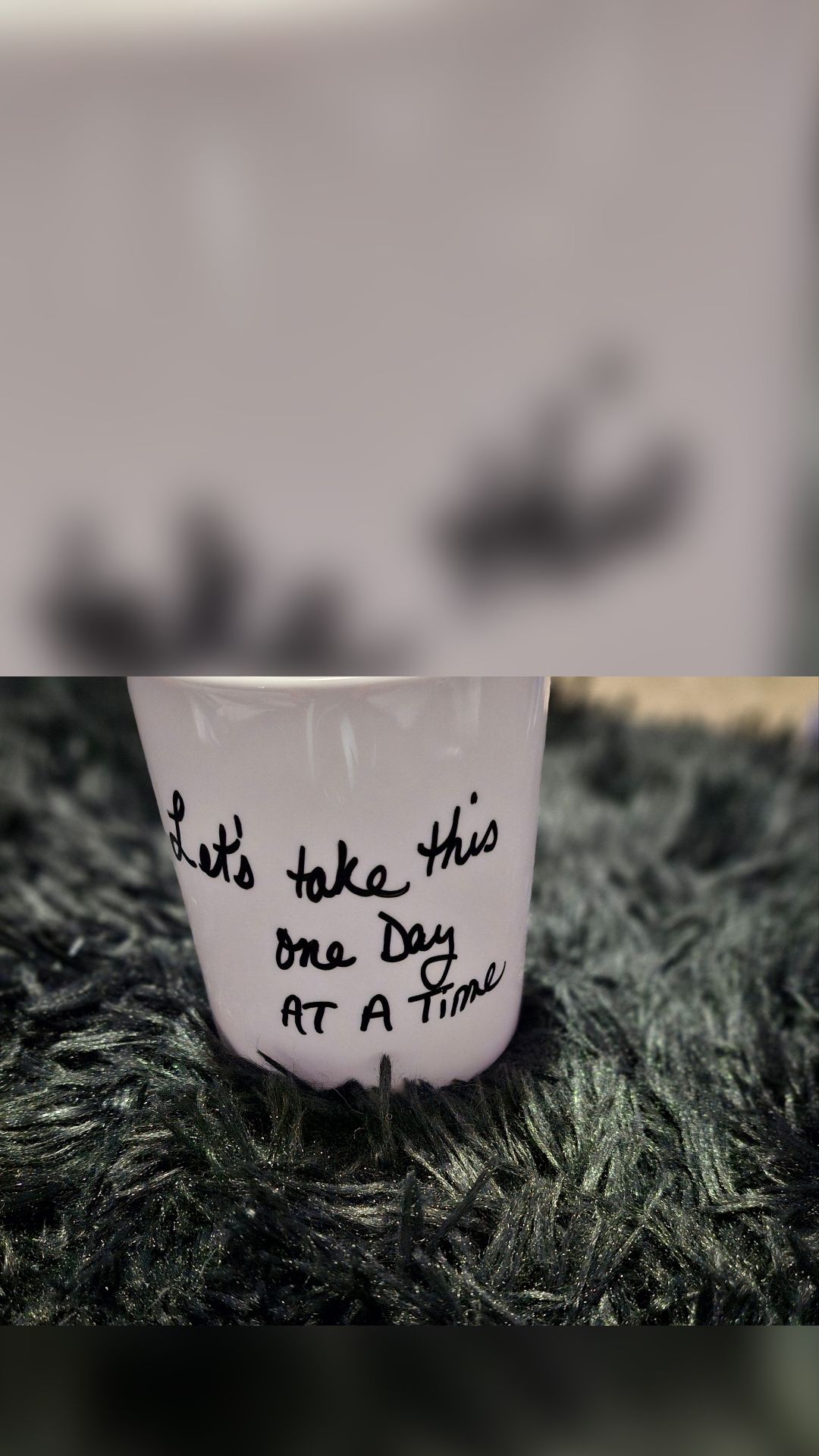
  • Take one day at a time. I don’t remember where I exactly got this advice, but it is definitely something I have come to learn as well as it is my life’s motto. It is often said to break a large task or goal into smaller tasks or steps as well as to study something in chunks. Life to me should be dealt with in the same manner. Take one day at a time. Do what you can today. Don’t overwhelm yourself or your schedule. Focus. Prioritize. Know when to rest and know when to go. Don’t rush life. You miss important lessons and moments. Don’t skip any steps in your journey of life, healing, etc. Don’t let life’s worries keep you in yesterday or force you in tomorrow (although I know it is easier said than done). Take one day at a time and keep living while doing so.
  • Do what is best for you. My best friend gave me this piece of advice, and it was words I needed to hear. Let’s put a disclaimer here: it doesn’t mean to neglect your responsibilities or those you love. Or to do what is best for you that will harm someone else. And sometimes, we don’t know what may be best for us, so we need to seek God. Yet choosing you and doing what is best for you is necessary when you know or are learning what is best for you. When you know your deal breakers, goals, and purpose, and you are not going to compromise. When you have to protect yourself and maintain your well-being. When you remember that you are the one who has to live with the decisions you have made. When you remember that your comfort (sans comfort zone) and peace too matter.

Alright, those are my best pieces of advice. I would love to know some of your best pieces of advice.

Tannika’s Writing Vault: Hip-Hop As A Learning Tool Pt 2

This is my new series where I introduce you to some of the past material I’ve written. I have written skits for special events at church and I have also written short stories, some of which I admit are half-done. Did I tell you, I once created my own entertainment magazine in high school! But I won’t be sharing my little paper bootleg magazine. At least for now. Anyway, welcome to Tannika’s Writing Vault and enjoy!

Here is an article I wrote when I was in college studying English: Professional & Technical Writing with a concentration in Journalism. It was subsequently asked to be published on a Hip Hop site but I can’t seem to find the site anymore.

Hip-Hop As A Learning Tool

By Tannika Moore (c) January 4, 2007

Pt 2

Fruchter is a thin white man with short dark hair, glasses and slight facial hair. He mostly dresses in jeans or khaki pants and a tee. He seems to be laid back even when he sits down to talk.

To the students, however, it doesn’t matter that a white man is using Hip Hop to teach them. “I feel like we both can relate to each other,” Cortez McClung, 13, says. “He knows where we coming from and we know where coming from,” he said.

It doesn’t matter to Christopher Taylor, 12, either. He attends Henderson with McClung too and is a regular of Fruchter’s course. “[Hip Hop] is international,” Taylor says.

To answer the critics question of how can he relate to Hip Hop or the African American students he teaches, Fruchter reiterates that he is not teaching Hip Hop, and also refers to his own background.

“There are many classes that teach the history of Hip Hop, and that is important for people to learn. However, I’m not doing that here. I’m not claiming to be a Hip Hop historian. I am using Hip Hop as a vehicle for open communication and engagement with my students.” Fruchter adds, “I have a real passion and love for music. I know Hip Hop and they [the kids] know Hip Hop. If I had to learn Japanese to best reach these kids, I would do that. Luckily, I just have to dig into my record collection.”

Fruchter is also very familiar with the South Side of Chicago. He grew up not far from Henderson Elementary in Hyde Park (another south side community in Chicago), and as a child Fruchter was exposed to a wide variety of individuals and experiences. Hyde Park is known for its variety of races and cultures. The neighborhood made a profound imprint on Fruchter. He says that regardless of what color you are, if you are an aware person, you know what’s going on. And with awareness comes responsibility and purpose.

“Just because I’m white does not mean that I am blind to the poverty, and educational inequality, and other problems that exist on the Southside of Chicago, or throughout the rest of the country. To change anything, you have to go out of your comfort zone. That is another thing that separates this from what is called Hip Hop Academia. I don’t study Hip Hop through books, and magazine articles. I study it by joining community centered Hip Hop organizations, going to concerts, playing music, and interviewing artists. I think it’s important to also show kids that Hip Hop is something that is all around them, and does not just exist on TV.”

Indeed Fruchter loves music and knows Hip Hop. He practically eats, drinks, and sleeps music. Besides teaching a Hip Hop-inspired course, Fruchter also deejays. He’s been deejaying with turntables for three and a half years. He plays all kinds of music from classical to Hip Hop but the most requested music comes from the Billboard Music chart Top 40 Hits.

As a deejay, Fruchter created the mixtape series titled “A poor Craftsman Always Blames His Tools.” Currently, he is a chairperson for the national organization called Hip Hop Congress. The Hip Hop Congress was formed to get people involved in Hip Hop music and culture to be active in their communities. The non-profit program puts events together like can food drives, lectures, free-style rap battles and concerts.

Fruchter is also a writer and the managing editor for SoundSlam.com (a Hip Hop online magazine). He has interviewed over 100 artists including the Beastie Boys, Busta Rhymes, Common, Lupe Fiasco, and Wyclef Jean.

Right now, though, his focus is on inspiring young people to learn through Hip Hop. “I remember when I was their age, and how inspired I would get when listening to music. Music taught me a lot, and helped me to understand the world around me better. I just want to show that to my students.”

He continues to teach the course at Henderson as well as to eighth graders at KIPP (Knowledge Is Power Program) Academy on the West Side of Chicago.

One of Chicago’s top high schools, Morgan Park Academy, has also taken interest in the class. Fruchter hopes to begin teaching “You Can Quote Me On That!” there in 2007. “If I can expose some kids to real creative people (like the Beastie Boys and Mos Def) that inspired me to take ownership of my thoughts, feelings, and aspirations, hopefully some of them will walk away inspired as well,” Fruchter says.

Fruchter pauses to take his time to reflect on what he wants students to walk away with. “A sense of control for themselves, their future and lives,” he says. “I want them to walk away with a better understanding of psychology and sociology and how it affects them. And I want them to walk away with better reading and writing skills.”

With that in mind, Fruchter saw a need for children to learn psychology and sociology when he was teaching full time. Fruchter believes that psychology has helped him to see things in his own life differently. He feels like this course can help address some of the issues like self-efficacy, conflict-resolution, self-concept (these are a few topics discussed and taught in the course) in their lives.

Keondra Booker, 9, says she learned more about social skills from the course. More profoundly, she calls out two of the psychology/sociology terms she learned in the course. “I remember self-concept and self-efficacy.”

Fruchter, who graduated from Indiana University with a Bachelor’s degree in both psychology and sociology, wants the students to be active listeners and critical thinkers. “The kids respond well to Hip Hop.” Plus, Fruchter believes that if Hip Hop artists are willing to put their music out, we are either going to listen or not, but it would be better to think or analyze what we hear.

“You won’t get the real meaning of the song, if you just listen to the beat,” Taylor says. Taking this class has helped him to pay attention to the lyrics, something he didn’t do before. McClung believes the lyrics are the most important part of the song. As for Booker, she believes you get a sense of emotion when you pay attention to the lyrics and not just the beat.

With a good response from the students, Fruchter plans to get the course in more schools and the lessons much tighter. He has researched the songs, principles and theories that he teaches and applies to the lessons to make sure they are as accurate as possible.

Fruchter has been meeting with Chicago Public School officials, has performed a trial run at Henderson to get it taught during the day, is seeking a vendor’s number, and wants to put together workbooks and materials to support the course.

Richard K. Richardson, principal of Henderson, observed the course trial run. He noted that the students were interested and involved in the lesson that included reading, writing and critical thinking. “I think it [the Hip Hop based course] could be used to develop reading and writing concepts, but it needs to be aligned with the reading and writing objectives.”

Fruchter agrees, and is currently explicitly aligning all of his lessons to the Illinois State Learning Standards, many of which are already touched on in his class. He also wants to add an ISAT prep component, to add to the program’s appeal. Eventually, Fruchter wants to train others to use Hip Hop to communicate sociology and psychology to young students, especially if the children are listening. “My plans [for this course] are to keep doing it, refine it and expand it.”

____________________________________________________________

If you haven’t read Pt 1 of this article, click here: Tannika’s Writing Vault: Hip-Hop As A Learning Tool Pt 1

Daily Habits That Improve My Quality of Life

What daily habit do you do that improves your quality of life?

I will get straight to it. My daily habits that improve my quality of life are:

  • Making my bed every morning. It is a small discipline that makes a big impact. “If you make your bed every morning, you will have accomplished the first task of the day. It will give you a small sense of pride and it will encourage you to do another task and another and another”–William McRaven
  • Pray or acknowledge God. Let me be honest. I am not always stopping to pray in the morning but better believe by the end of the day, I have sat down with God in my heart to say thank you, share my heart, pray for my self or someone else. And I am learning to listen more because prayer with God is a dialogue and not a bringing of a list of wants. Yes, come to Him with what you need and even discuss your wants. To clarify, bring to Him every content of your heart (everything including fears, disappointments, goals, etc.) but make sure you learn to listen to what is in His because He knows what is best for us. His purposes always come to pass and His plans always succeed. Moreover, prayer is about getting to know God and inviting Him into every area of your life.
  • Read the Word of God. I don’t care if it is the YouVersion scripture of the day or a random chapter or a chapter or three of a God-led lesson I am currently studying, I read His Word. Have I missed a day or two or three? Honestly, yes, but it makes so much of a difference when I sit down to read and hear His Word.
  • Another daily habit of mine is making a list of things I am grateful for. This puts things in perspective and lifts my spirit as I list all of the things I am grateful for, no matter how small they may seem.
  • This isn’t daily but I go over my goals list. I have always been goal oriented and like to reflect on and assess my goals and where I am in accomplishing them.
  • I also journal or work in my planner. This helps me to sort out my thoughts, plan and stay organized.
  • Lastly, I make a daily habit of choosing to get up and choose peace and to better myself. Thank God for His grace to be able to do so.
Let’s Take This One Day At A Time Planner Available at Amazon.

Last Summer Project

I have been under the weather this week but Friday, I pressed through to complete a project that I have been wanting to do for awhile. I have been wanting to make some changes to my room and definitely wanted to do it just in time for the school year. So, after seeing my nephew to the bus stop for his first year of high school and cleaning the house, I started my final summer project.

I painted my room and reorganized it to give it an ambience of peacefulness, warmth, femininity and a bit of chicness.

These are my before pictures:

As always it is fun doing these painting and redecorating projects but they are tiring and I make a lot of boo-boos. But overall, I am pleased with the end result. Here is how it turned out: